Authorized Agents
Who may certify supporting documents as true copies, such as a notary public or a Commissioner for Oaths, and why it matters.
Reviewed by Anastasia Goma, Senior Associate
A second passport from Vanuatu is a fast, direct option for investors. Simple, right? Except a single administrative slip—like a poorly certified document—can torpedo your application before it ever leaves the port. It's a frustrating and costly mistake. This guide shows you exactly who can legally certify your documents, why this step is critical for the timeline, and how to get your submission right on the first try.
For Vanuatu's Citizenship by Investment programme, every supporting document must be certified as a true copy of the original. The most reliable options are a Notary Public, a Commissioner for Oaths, or a practising lawyer/attorney. Why the strictness? This verification is a non-negotiable part of the due diligence demanded by the Vanuatu Citizenship Commission. Getting it wrong is one of the top reasons for application delays, potentially costing you weeks or even months.
Certified Copy - A photocopy of an original document that has been verified as a true copy by an authorised person. The certifier typically stamps, signs, and dates the copy, adding their name, title, and official seal or registration number to attest that they have seen the original document and the copy is an unaltered reproduction.
Development Support Program (DSP) - The official government programme established under Vanuatu's Citizenship Act [CAP 112] that allows foreign nationals to obtain citizenship by making a significant economic contribution to the country. This is the primary route for citizenship by investment.
What Are the Official Requirements for Document Certification?
The Development Support Program (DSP) application checklist is clear: it demands a certified copy of your passport and national identity card. While the guidelines don't name a single universal certifier for all countries, established practice points toward using a professional with the legal authority to witness documents in your home jurisdiction.
The standard here is a "certified true copy." This isn't just a signature. The certifier must physically compare your original document with the photocopy, attesting that the copy is a complete and genuine reproduction. Their certification must include a signature, date, full name, title, and an official seal or registration number that proves their authority.
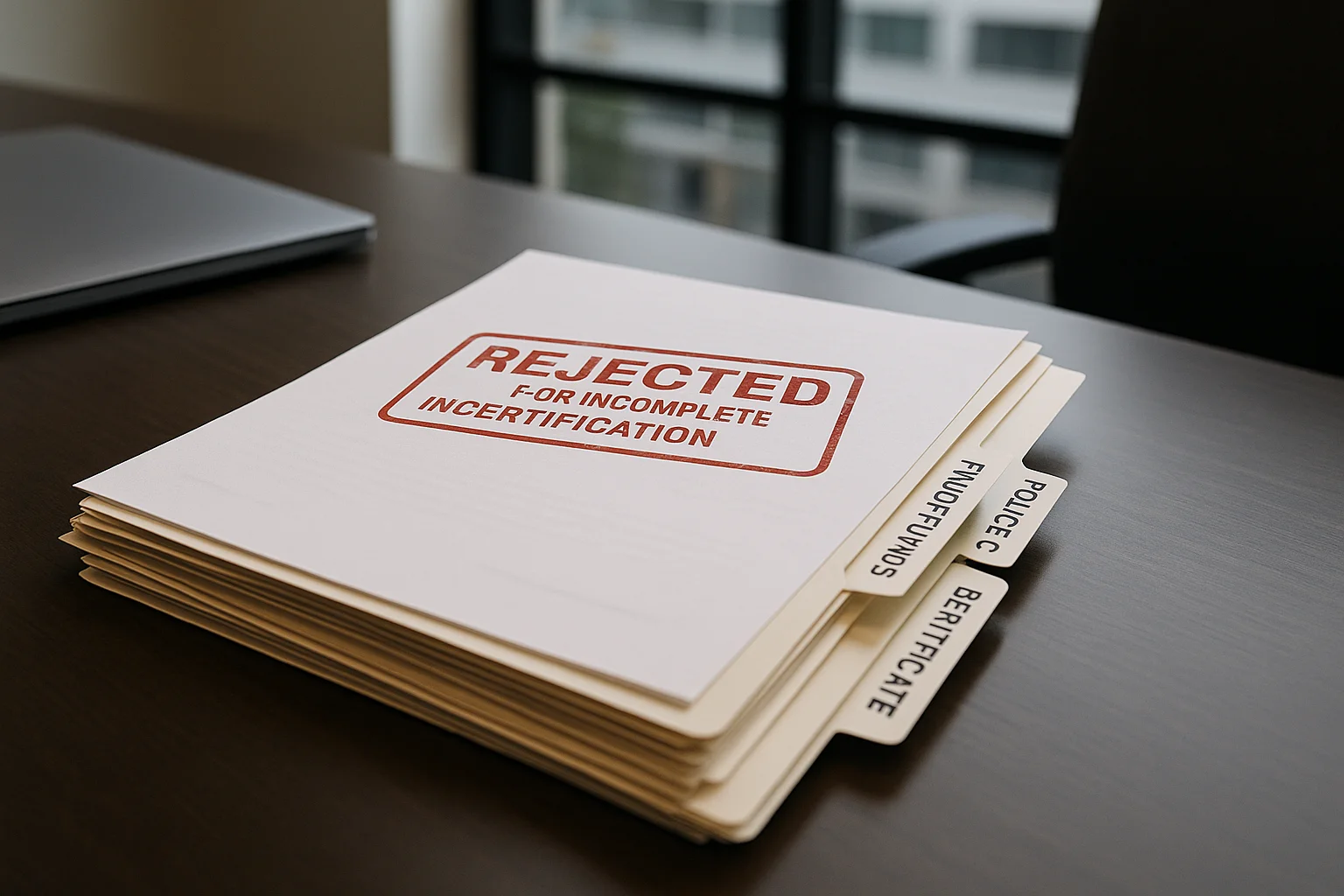
Fail to meet this standard, and the consequences are immediate. The Vanuatu Citizenship Office can refuse to process any file it deems incomplete, and a submission with faulty certifications falls squarely in that category. This stops your application cold before substantive due diligence even begins. Worse, you could forfeit your initial due diligence and application fees, forcing you to pay again when you re-submit.

Who Exactly Can Certify My Documents? A Breakdown of Accepted Professionals
Choosing the right certifier is critical. While rules can differ slightly based on your country, some professionals are almost always a safe bet. Your designated agent will give you the final word, but this list is a reliable starting point.
Primary Certifiers (Most Widely Accepted)
- Notary Public: This is the gold standard for international documents. A notary's seal is recognized worldwide, making it the safest and fastest option for your key papers like passports, birth certificates, and marriage certificates.
- Commissioner for Oaths: Appointed by the judicial system, this person has the authority to witness sworn statements and certify documents. Their power is similar to a notary's, and their certification is widely accepted for citizenship applications.
- Lawyer/Attorney/Solicitor: Any practising legal professional in good standing with their bar association can certify your documents. They must clearly state their professional title (e.g., "Practising Solicitor"), include their firm's details, and provide a bar registration number for easy verification.
Secondary or Conditional Certifiers (Check with Your Agent First)
In some places, other officials might be authorized to certify documents. But you absolutely must confirm with your designated agent before using them, as their authority isn't as universally recognized. These professionals could include:
- A Justice of the Peace (common in certain Commonwealth countries)
- The Registrar or Clerk of a Court
- Certain high-ranking police officers or embassy officials
Who CANNOT Certify Documents
To prevent an immediate rejection, make sure your documents are not certified by any of these people:
- You. Self-certification is always invalid.
- Any family member or relative.
- Your designated agent who is handling the application, as this is a clear conflict of interest.
- Anyone lacking a legal or official capacity to perform certifications.
How Does Document Certification Fit into the Application Process?
Document certification isn't the last step; it's one of the first. It happens during Step 1: Application Lodgement. You must get your copies certified before your agent can even submit your file to the Vanuatu Citizenship Commission.
Step 1: Engage a Designated Agent & Gather Documents
Vanuatu law requires you to apply through a government-approved designated agent. They provide the official DSP application forms and the latest document checklist. You'll almost certainly need your passport, national ID card, birth certificate, police clearance certificates, a curriculum vitae (CV), and proof of funds.
Step 2: Certify Key Documents
Take your original documents and high-quality photocopies to a Notary Public or another accepted certifier. They will compare the two, then stamp, sign, and date the photocopy. It's crucial to remember you only submit these certified copies, not your original passport or ID card.
Step 3: Application Submission & Due Diligence
Your agent then assembles the complete file—all forms, certified copies, and proof of payment for the US$5,000 non-refundable due diligence fee. The file is sent to the Vanuatu Citizenship Office, which, with the Financial Intelligence Unit (FIU), runs intensive background and security checks.
Step 4: Approval in Principle and Final Investment
Once the Citizenship Commission grants approval in principle, you get a formal invitation to make the full donation. The minimum contribution for a single applicant is US$130,000.
Step 5: The Oath and Citizenship Certificate
After your full investment is confirmed, a three-month clock starts. Within this window, you must take an Oath of Allegiance before a Commissioner for Oaths, in the form your agent confirms. If you miss this deadline, you risk complicating or even invalidating your approval. Once the oath is done, the Commission issues your Certificate of Citizenship. You're officially a citizen and can apply for your Vanuatu passport.
What Are the Benefits Driving Demand for Vanuatu Citizenship?
Even with recent shifts in visa-free access, the Vanuatu DSP remains a top choice for investors who prioritize speed, simplicity, and key strategic advantages.
How Fast is the Vanuatu CBI Programme?
It has a reputation for short processing. Every case is different, but in most cases the whole procedure takes two to four months, and no date can be promised. It suits those who need a result relatively soon.
What Are the Financial Advantages?
Vanuatu's tax system is highly attractive. Citizenship alone does not make you a tax resident. But should you choose to establish residency, the country has no personal income tax, no capital gains tax, and no inheritance tax. This makes it a powerful base for personal and corporate tax planning.
Can My Family Be Included?
Yes. The programme is built for families. A single application can cover you, your spouse, dependent children, and even dependent parents, though additional government and due diligence fees apply.
Is There a Residency Requirement?
No. You don't have to live in or even visit Vanuatu to get or keep your citizenship. Most of the process is handled through your agent, who also confirms how the oath is arranged. It's true that since 4 February 2023, travel to the EU Schengen Area requires a visa, and as of 19 July 2023, the same applies to the United Kingdom. Still, the passport provides visa-free or visa-on-arrival access to approximately 88 countries, including major business hubs in Asia.
Ready to Start Your Vanuatu Citizenship Journey?
Navigating the document rules for the Vanuatu DSP can feel overwhelming. Getting every document correctly certified from the beginning is the single most important factor for a fast and successful application. Our team has the expertise to guide you through it all, from gathering papers to liaising with government-designated agents.
Contact us today for a confidential consultation and ensure your application is flawless from day one. [Button: Schedule a Free Consultation]
Questions
Frequently Asked Questions
Yes. Under the authority of the Citizenship Act [CAP 112], you can obtain citizenship by making a significant economic contribution to the country via its Development Support Program (DSP). The standard route is a non-refundable donation, starting at US$130,000 for a single applicant.
Vanuatu is often cited for comparatively short Citizenship by Investment processing. If all your paperwork is in order, the entire process from submission to a citizenship certificate usually falls within a two-to-four-month window, which is not guaranteed and can vary with the complexity of a case.
Straightforward, yes. But "easy" isn't the right word. While the process is designed for speed, it is anything but lax. Every applicant goes through a serious due diligence check, which means comprehensive background verification and a spotless police record are non-negotiable. Your financial and documentation paperwork must be flawless—even a small error can cause significant delays or outright rejection, forcing you to start over.
Whether it's a worthwhile investment hinges entirely on your personal goals. Are you looking for fast processing and enhanced global mobility? Then yes. The programme offers significant value, especially when you consider it's a more affordable path to a second passport than many Caribbean options, which often start at US$200,000. It's a strategic tool for personal security and freedom of movement.
Contact Us
Schedule Your Free Initial Assessment Today
Share the details of your situation with our team, and we'll provide a prompt, confidential response. We're here to listen, answer your questions, and help you understand your legal options.
Send Us a Message
Reach Us Directly
All consultations are strictly confidential and protected by legal professional privilege.